What should you check before buying an organic cotton pillow?
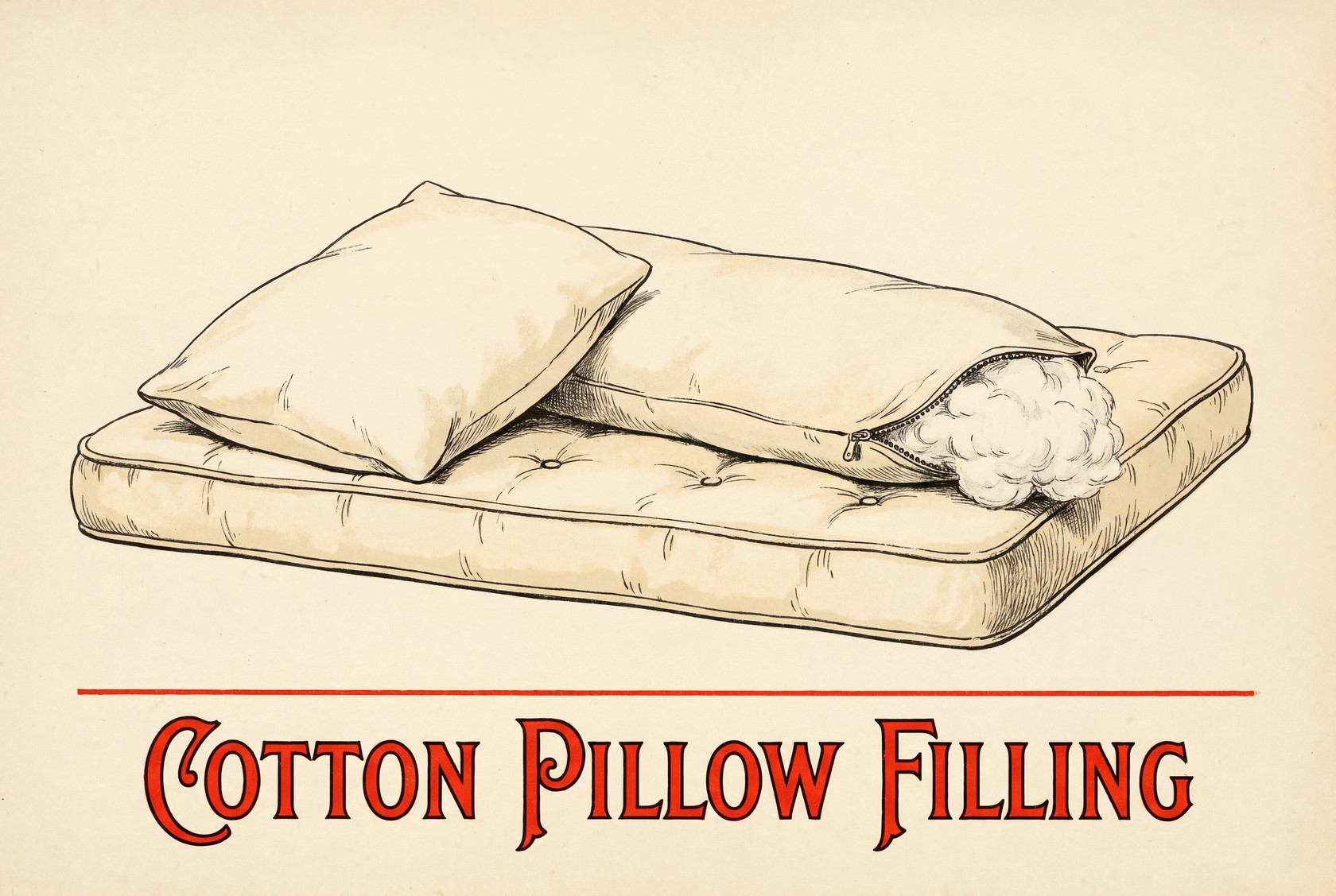
An organic cotton pillow is a woven cotton case filled with cotton batting. Some or all of that cotton was grown under organic rules. The word on a listing can describe the whole pillow or only the fabric you touch. This guide shows how to tell the difference, what the fill should weigh, and what US sellers charge.
Short answer: Buy one only if the listing says the finished pillow is certified organic and the certificate covers the fill, not just the cover. The GOTS "organic" grade requires at least 95% organic fiber, while "made with organic" can mean as little as 70% (The Roundup). As a guide to weight, one US maker fills a standard pillow with 2.7 to 4 lbs of cotton (Rawganique), and the heavier pillow is the firmer one.
This guide is for: people in the United States comparing organic cotton bed pillows or body pillows who want to know what the label proves before they pay.
Key Takeaways
Three points carry most of the decision: what the label grade means, how much batting you get, and what a body pillow weighs.
- 95% versus 70%. A GOTS "organic" label sets the higher floor for organic fiber, while "made with organic" sets the lower one (The Roundup), so check which grade the listing names before you trust the word.
- 2.7 to 4 lbs of cotton. That is the range one maker publishes for its standard pillow from soft to firm (Rawganique), and because cotton does not spring back, a heavier pillow feels firmer.
- 7.6 lbs for a body pillow. One seller's Junior cotton body pillow holds that much fill and costs $233 without a zipper (Rawganique), roughly double the batting of its standard bed pillow, which explains most of the price gap.
On This Page
Nine questions follow, in the order most people ask them, from what the label proves to how you wash the finished pillow at home.
What does organic mean on a cotton pillow label?
Organic on a pillow usually points to GOTS, a textile standard with two main grades: at least 95% organic fiber, or at least 70%.
In the United States the word works on two layers. Raw cotton is a farm crop, and the USDA allows textiles that meet the Global Organic Textile Standard to be sold as organic (USDA AMS). The Organic Trade Association adds that a textile sold in the US that implies it is certified organic must meet either the USDA rules or GOTS (OTA). That is why GOTS is the mark you will see on most organic pillows.
GOTS sorts products into grades by how much of the fiber is organic (The Roundup). Each grade sets its own floor, shown in the table below.
| GOTS label grade | Minimum fiber share | What it means for a pillow |
|---|---|---|
| Organic | 95% organic | Nearly all the fiber in case and fill is organic |
| Organic in-conversion | Mostly in-conversion fiber | Fiber comes from farms still switching to organic |
| Made with organic | 70% organic | Part of the fiber can be something else, so the stated share matters |
The in-conversion grade is for fiber from farms that are still partway through the switch to organic growing. If you want a pillow that is cotton all the way through, the grade to look for is "organic," not "made with organic." A listing that names no grade at all has only made half a claim.
Does the organic claim cover the fill or only the cover?
Often only the cover. A pillow is two products, a woven case and a pile of batting, and a certificate can reach one without the other.
Most listings describe the part you can see. A phrase like "organic cotton cover" or "organic cotton shell" can be true of the fabric while leaving the inside unstated. On one Amazon page, a related listing pairs an organic cotton cover with a down alternative fill (Amazon). Naturepedic's pillow page lists an organic cotton cover and a fill of PLA batting made from non-GMO sugarcane (Naturepedic). Both covers are organic. Neither fill is cotton.
The right wording puts the certificate on the finished pillow. Lifekind's cotton pillow page describes a spiral cotton fill and a quilted cover. It states that the finished product is GOTS certified (Lifekind). That is the sentence to look for: the whole pillow, fill included.
The rule that follows is simple: find the sentence that names the fill. What batting is, and how it differs from loose fiber, is covered in what cotton fill is.
| Wording on the listing | What it proves about the fill | Our reading |
|---|---|---|
| "Organic cotton cover" or "shell" | Proves only the fabric | Assume the fill is something else until the page says otherwise |
| A certification claim with no standard named | That a claim exists, not who checked it | Ask which certificate covers the fill |
| Finished pillow is GOTS Certified Organic, fill named | The claim reaches inside | Ask for the certificate before you buy |
How often does the organic certificate reach the fill?
We read eight US product pages for cotton-filled organic pillows and sorted each one by whether its certificate reaches the fill.
We read eight seller pages on September 23, 2026: five bed pillows and three body pillows, all sold as organic cotton with cotton fill. We sorted each page by the words it uses about the fill, not the cover. This is a count of published statements, done the way our method page describes; we did not weigh, wash or test any pillow.
| What the page says about the fill | Pages, of the eight read |
|---|---|
| Ties a GOTS certificate for the finished pillow to the fill | 3 |
| Makes a certification claim with no standard tied to the fill | 1 |
| Calls the fill organic with no certificate named | 4 |
First bucket: Organic Textiles, Magnolia Organics and Lifekind.
Second bucket: Pure Living Space.
Third bucket: Rawganique bed pillow, Rawganique body pillow, Pure Living Space body pillow and Looms & Linens on Amazon.
The middle bucket is the subtle one. The page makes a certification claim, but it ties no named standard to the batting. From the page alone, you cannot tell who checked the inside.
The count has limits. A page in the last bucket may sell a certified pillow and simply say so poorly, and a page in the first still needs its certificate checked. Even so, half the pages left the fill uncheckable from the page alone.
How can you check a GOTS claim yourself?
Read the grade on the label, find the sentence about the fill, then ask the seller for the certificate and check that it lists pillows.
A GOTS label has a few fixed parts, and you can read most of them before you add anything to a cart. The Organic Trade Association notes that GOTS admits only textile products above a minimum share of organic fiber. It also sets rules for dyes and other chemical inputs (OTA).
- Read the grade. Look for "organic" or "made with organic," and for the second, the stated share of organic fiber. A listing that shows the logo with no grade has left out the most useful part.
- Find the fill sentence. Look for words that tie the certificate to the batting inside, not only to the case or the fabric it is sewn from.
- Ask for the certificate. A seller with a certified pillow can send the certificate that covers it, which names the company, the products in scope and the dates it is valid.
- Match the scope to pillows. A certified fabric mill upstream does not make the finished pillow certified, so look for pillows or bedding in the listed products.
If the seller cannot send a certificate, treat the organic claim as unchecked until it can. A seller with a certified pillow can usually answer in a single email, and a vague reply is useful information too. Keep the email. It records what the seller told you before you paid.
How heavy and how high should an organic cotton pillow be?
Cotton batting is dense, so weight tells you firmness. One US maker fills a standard pillow with 2.7 to 4 pounds of cotton batting.
Sellers describe a pillow's height as its "loft"; this guide says height. Cotton does not spring back the way down or polyester does, so fill weight is a better guide than a label word like soft or firm. One seller calls organic cotton a dense pillow, not the softest but not firm (Pure Living Space).
Rawganique publishes a fill weight for each size and firmness, and each larger size holds more cotton than the standard (Rawganique). Lifekind sells its cotton pillow in three heights, light, medium and full. It matches them to stomach, back and side sleepers in that order (Lifekind). That gives you a way to choose if you know how you sleep.
Cotton also settles with use. Lifekind notes that cotton fillings compress by about half over time, and it advises ordering one height fuller than you expect (Lifekind). That is the case for a zipper. Rawganique recommends buying the firmest pillow in a zippered version so you can adjust the fill as it settles (Rawganique).
If you already own a pillow you like, press it flat with your hand and note its thickness. Cotton will sit closer to that pressed height than to its height on the shelf. Our longer take on cotton fill is in Is a 100% cotton pillow worth buying?.
What sizes does an organic cotton body pillow come in?
The common US body pillow is 20 by 54 inches, and some sellers add a longer 72 inch size. Cases run about an inch wider than the insert.
Most sellers stock the shorter size first. Looms & Linens sells its organic cotton body pillow insert in several lengths (Looms & Linens on Amazon), and Rawganique makes a Junior at the shorter size and a Full at the longer one (Rawganique).
The weight surprises people. Rawganique's Junior holds 7.6 lbs of cotton and its Full holds 12 lbs (Rawganique). That is a lot to shift across a bed at night, and a cotton body pillow is heavier than most people expect.
Cases come slightly wider than the insert so the pillow slides in without bunching. Bioweaves sells an organic cotton body pillow case, listed as GOTS Certified Organic, cut an inch wider than the common insert (Bioweaves on Amazon). Pure Living Space offers its body pillow with a slip-on or zippered cover and hand stuffs it to avoid clumping (Pure Living Space).
If you plan to hug the pillow or keep it between your knees, the zipper matters even more here than on a bed pillow. You can take out fill until the weight and thickness suit the way you sleep, and set the extra batting aside in a cotton bag for later.
What does an organic cotton pillow cost in the US?
Expect about $100 or more for a standard cotton-filled pillow from a small US maker. The zipper, the size and the firmness all add to it.
Rawganique's standard pillow runs from $98 for the soft version without a zipper to $133 for the firm version with one (Rawganique). A zipper on its own is a small add-on at most sellers, and Pure Living Space offers one as an option on its bed pillow (Pure Living Space).
Reading those prices beside the fill weights, firmer costs more because it holds more cotton. Each step up in Rawganique's list adds weight and price together, so a soft pillow with a zipper can be the better value if you are unsure. You can always add batting later.
Returns matter at this price. Rawganique does not accept returns on pillows and ships them sealed in plastic to prevent contamination (Rawganique). It does sell small fill samples (Rawganique), which let you press the cotton before you commit. A sewn-shut pillow gives you no second chance, because if the height is wrong you either live with it or buy again.
Read the return policy before you compare prices. A cheaper pillow you cannot return or adjust can cost more in the end than a pricier one with a zipper, and the body pillow price in the takeaways shows how fast that gap grows.
How do you wash an organic cotton pillow?
Mostly you wash the case, not the batting. A zipper lets you take the fill out, wash the ticking, and put the cotton back in by hand.
Rawganique's care note says a zippered pillow lets you remove the filling and wash the ticking by machine or by hand. A pillow without a zipper should be spot-cleaned only (Rawganique). It also suggests airing the pillow each season, and a brief spell in the sun or a sprinkle of baking soda for odors.
Medical advice on dust mites targets what you can wash. Nationwide Children's Hospital advises washing sheets and linens weekly in water of at least 130 degrees F (Nationwide Children's). Batting cannot take that kind of wash. So the advice lands on the cover instead.
The same hospital page tells families to buy allergy covers for all the pillows on the bed, and ACAAI suggests dust-proof covers on pillows, mattresses and box springs (ACAAI). With a cotton pillow, a washable outer cover does the hygiene work while the batting stays dry. Our care section covers the wider routine for natural fills.
Does organic cotton change anything beyond your bedroom?
It changes how the cotton was grown and processed, without synthetic fertilizers or genetic engineering, but it says little about comfort.
In the US, organic fiber must be grown to National Organic Program standards, without toxic and persistent pesticides, synthetic fertilizers or genetic engineering (Organic Trade Association). That rule covers the field the cotton came from.
GOTS then reaches past the farm. The Organic Trade Association says all chemical inputs such as dyes must meet environmental and toxicological criteria under GOTS. Any wet-processing unit needs a working wastewater treatment plant, and processors must meet minimum social criteria (OTA). So the label covers the farm and the factory.
Some sellers say where their cotton comes from. Rawganique fills with USA-grown organic cotton (Rawganique), and Pure Living Space says the batting in its pillow inserts comes from Texas (Pure Living Space). If origin matters to you, ask the seller which region grew the cotton and which mill made the batting.
What the label does not certify is comfort. Organic tells you how the cotton was grown and processed, not how well you will sleep, so judge the feel by weight, height and whether you can adjust it.
Common questions
Short answers to the questions people ask most often after they have read a listing and before they choose a pillow to buy.
Is an organic cotton pillow hypoallergenic?
Some sellers describe organic cotton as naturally hypoallergenic (Organic Textiles), but no organic standard tests for that. Dust mites can live in any pillow, so the medical advice still applies: use a dust-proof cover and wash it hot.
Is USDA organic the same as GOTS on a pillow?
No. The USDA says that unless the finished product is certified to its organic regulations, a label may not state or imply that it is USDA organic or use the seal (USDA AMS). A pillow that meets GOTS can still be sold as organic in the US without that seal.
Can I make a cotton pillow softer or flatter?
Only if it has a zipper. You open it and pull out batting a handful at a time until the height suits you. A sewn-shut pillow stays as it arrived.
Why does cotton fill go flat over time?
Batting packs down under your head each night. Lifekind says cotton fillings compress by about half over time, and a zipper lets you add fill later (Lifekind).
Can I return an organic cotton pillow?
It depends on the seller, and many say no. Some small makers refuse pillow returns for hygiene reasons, so read the policy before you pay and order a fill sample if one is offered.
Does a body pillow need its own organic case?
It needs a case cut for its length, since a bed pillowcase will not fit. A case about an inch wider than the insert fits well, and you can wash it far more easily than the fill.