Does a GOTS label on a pillow cover the fill, or only the cover?
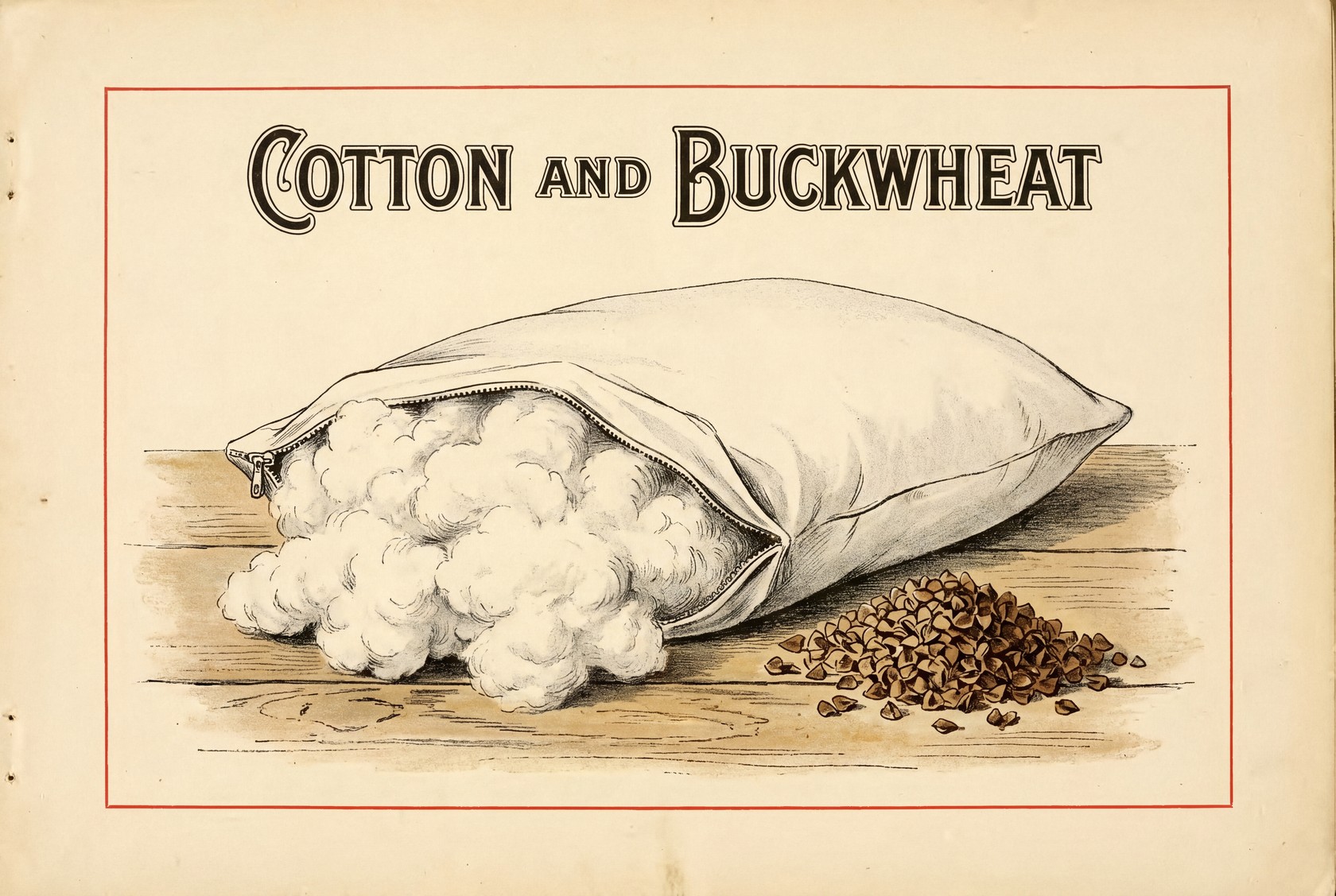
A pillow, even a plain 20 by 26 inch standard, is 2 parts: a cover sewn around a fill. A GOTS claim can belong to either part or to the finished pillow, and many listings print the word without saying which. GOTS's own rules treat a fabric on a certificate and a finished product on a certificate as two different things.
Short answer: A GOTS claim reaches the fill only when the certificate names the finished pillow. Under GOTS rules, certificates for parts such as fabric do not make the product certified. Many pillow pages still attach GOTS to the cover or shell alone. We read 12 seller pages. Of those, 2 named the finished pillow along with a named certifier, 8 tied GOTS to a single part or material, and 2 used whole-pillow wording with nothing you could check.
This guide is for: people in the United States comparing organic pillow listings who want to know what a GOTS claim covers and where it stops.
Key Takeaways
Three points carry this page: the rule on parts, the meaning of the two label grades, and what a count of seller pages turned up.
- Of 12 seller pages we read, 8 tied GOTS to a part or material such as the cover, shell or batting. Only 2 named the finished pillow along with a named certifier. The other 2 applied the word to the whole pillow and gave you nothing to check it against.
- Under GOTS's published label grades, "organic" means at least 95% organic fiber and "made with organic" means at least 70%. Either grade describes the product named on the certificate. On a pillow, that product may be the cover alone, so a grade on a listing tells you nothing about the fill unless the finished pillow is named.
- Of the 12 pages, 10 did not name a certified finished pillow you could check. A certifier's name shows that a company holds a certificate. The scope certificate shows which kinds of goods that certificate covers, and that is the document to ask for.
On This Page
8 questions follow in order, from what the word means on a listing to when a cover-only certificate is still worth your money.
The first 4 sections explain the rule and the fills it can reach. The 5th reports what we found when we read seller pages. The last 3 turn that into checks you can run before you buy, and short answers to common questions close the page.
What does a GOTS claim mean on a pillow listing?
It means a certifier approved GOTS labeling for something, and the listing may not say whether that something is the whole pillow.
GOTS stands for the Global Organic Textile Standard. It sets rules for turning organic fiber into finished textiles, from spinning and weaving through dyeing and sewing. Those rules include limits on chemical inputs and requirements for working conditions at each stage. Its own labeling guidance is plain about the limits: GOTS covers textile processing, not the growing of cotton. The farm needs its own organic certification under a separate scheme before the fiber enters the GOTS chain (Global Standards labelling tool).
A pillow tests that scope hard. Every pillow has at least 2 parts, the cover and the fill, and each can come from a different supply chain. The cover fabric might come from a certified mill while the fill is packed at a factory that holds no certificate. A seller could truthfully call both halves organic cotton.
Certifiers also say only certified products may carry GOTS labeling (Oregon Tilth: requirements for GOTS labels), and every label must be approved by a certification body before use (Global Standards: GOTS labelling). A real claim therefore has paperwork behind it, and that paperwork names products. When you see GOTS on a listing, the useful question is rarely whether the claim was invented. It is which product the paperwork names: the fabric, the cover, or the pillow your head rests on every night.
Can a pillow carry a GOTS claim when only the cover is on the certificate?
GOTS's own rules say no. Parts on a certificate do not make a certified product, though a separate rule lets some mixed goods name one part.
The GOTS labeling guidance is direct on this point. It lists as incorrect any wording that credits only the fabric or other components, because partial certification cannot be represented as full product certification (Global Standards labelling tool). The same page says that for the end product to carry a GOTS label, every company that is part of the process must be certified. It gives the reason in plain terms: fabric sewn in an uncertified facility breaks the chain of custody, and the final product is then not considered certified.
Mixed goods have one route. GOTS allows a "combined product," meaning an item not normally classed as a textile, such as a car seat, a bassinet or upholstered furniture, to carry a certificate and label for its textile part (Global Standards FAQ). The same FAQ says only complete, finished products can be certified and labeled with a GOTS grade. The certifier decides whether a product qualifies and approves how the label is worded.
For you, the practical reading is simple. A pillow listing that puts GOTS on its cover is telling you about 1 of the pillow's 2 parts. It does not tell you that the fill was grown organically, processed without restricted chemicals, or sewn under audit. Whether a given listing is worded within the rules is for GOTS and its certifiers to judge. What the wording does tell you is where the claim stops.
What do the "organic" and "made with organic" grades tell you about a pillow?
The grades set a floor for organic fiber in the certified product. They say nothing about a pillow part the certificate never named.
GOTS has two main label grades. "Organic" requires at least 95% organic fiber, and "made with organic" requires at least 70% (Global Standards: GOTS labelling). A separate in-conversion grade covers fiber from farms moving to organic.
The grade applies to whatever product the certificate covers. If that product is a cover, the grade describes the cover's fabric. It does not average the cover with the fill, and it does not reach past the seam. Some buying guides blur this. One tells readers to look for GOTS on both the cover and the filling as a sign of organic content (Sleep Foundation). That advice holds only if both parts, or the finished pillow, appear on a certificate. US rules point the same way. The USDA's National Organic Program says textiles that meet GOTS may be sold as organic in the United States, but a label may not imply the finished product is USDA organic unless that finished product is certified to USDA rules (USDA Agricultural Marketing Service).
The grade also tells you something about the remainder. A "made with organic" cover can contain some conventional fiber, because GOTS places that grade between 70% and 95% organic fiber, a floor rather than a ceiling. If a listing prints a grade without saying which product it belongs to, you have a number with no subject. Ask the seller which item on their certificate carries it, and whether the fill appears anywhere on the same document.
Which pillow fills can a GOTS certificate reach?
The standard is built for textile fibers, so cotton or wool fill can sit on a certificate. Other fills need evidence of their own.
Because GOTS is built for textile fibers, what it can cover depends on what is inside the pillow. Cotton and wool fills can sit inside a GOTS certificate when the finished pillow is certified. Naturepedic's GOTS explainer gives cotton and wool batting as examples of fiber counted under the "organic" grade (Naturepedic). Other fills fall under other schemes, or under none.
The table below covers 6 common fills and is our reading of the seller pages it cites. No maker and no standards body publishes it.
| Fill | Can the textile standard reach it? (our reading) | What seller pages cite | What to ask |
|---|---|---|---|
| Cotton batting or shredded cotton | Yes, when the finished pillow is certified | The finished pillow, with a named certifier (Lifekind) | Is the finished pillow on the scope certificate? |
| Wool | Yes, as an organic textile fiber | Wool batting counted toward the organic grade in the explainer above | Same question as cotton |
| Buckwheat hulls | No, hulls are not a textile fiber | Organic hulls, scheme unnamed (Eco Health Lab) | Which scheme covers the hulls? |
| Natural latex | No | A separate organic latex standard, for the latex only (Naturepedic latex pillow) | Does the pillow hold a current organic latex certificate? |
| Down | No | Responsible Down Standard (Puredown; Naturepedic) | Which welfare standard applies? |
| PLA fiber | Unclear | Inputs described as approved, with no certificate named for the pillow (Naturepedic PLA pillow) | Is the pillow certified, or only its inputs approved? |
If your fill sits outside the standard, a cover on the certificate is the most it can offer. The fill then needs its own evidence.
How do seller pages describe GOTS on pillows?
We sorted a set of seller pages for pillows that mention GOTS by what each said the certificate covered, in three separate groups.
We read 12 seller pages for bed, neck and travel pillows that mention GOTS, found through web search on September 26, 2026. We left out pillowcases, protectors, throw-pillow covers and repeat listings of the same product. Each page went into the group that matched its most specific statement about scope. This is a count of published wording only. No pillow was handled.
| What the page said | Pages | Pages in this group |
|---|---|---|
| Finished pillow, with a named certifier | 2 | Lifekind cotton pillow; Naturepedic travel pillow |
| A named part or material only | 8 | Puredown; Naturepedic down; Naturepedic PLA; Turmerry pillow; Clean Bedroom wool pillow; Eco Health Lab neck pillow; Organic Textiles sleeping pillow; Organic Textiles cotton pillow |
| Whole-pillow wording, no certifier or part | 2 | Coyuchi molded pillow; iSleepSimple cotton pillow |
The 2 pages in the first group were clear. Lifekind's page names its certifier for the finished product. Naturepedic's travel pillow page lists GOTS, with its certifier, among the standards the product meets. Most of the 8 pages in the middle group were plain and accurate about scope. Puredown, for example, puts GOTS on its cotton shell and makes no such claim for the down fill. The 2 pages in the last group may have a finished-product certificate behind them, but you cannot tell that from the page alone.
How do you check whether the whole pillow is certified?
Ask for the scope certificate and read its product list. If the finished pillow is not on it, the claim stops at whatever is listed.
Start with the listing's wording, then get the documents. The 5 rows below turn common listing phrases into what each one tells you and what to ask next. The table is our reading of GOTS's published rules. It is not something any seller publishes.
| Wording on the listing | What it tells you | Ask next |
|---|---|---|
| GOTS named on the cover or shell | The cover is on a certificate; the fill is unknown | What is the fill, and which certificate covers it? |
| A claim that names only the fabric | GOTS lists fabric-only claims as incorrect | Does the certificate name anything beyond the fabric? |
| GOTS with no part named | Scope unknown | Certifier's name and scope certificate, please |
| "Finished product certified" plus a named certifier | The strongest wording we found | Does the certifier confirm it? |
| GOTS plus a second standard | Two standards, parts unstated | Which part does each one cover? |
Then work through 3 checks.
- Get the certifier's name and the label grade. A GOTS label must show the label grade and the certifier's name (Oregon Tilth: requirements for GOTS labels).
- Ask the seller for the scope certificate. It attests that the supplier can work to GOTS rules for the products listed in the certificate's appendix (Trace for Good).
- Look for the finished pillow in the product list. If the certificate lists only fabric or covers, the claim ends there.
If something still looks wrong, contact the certifier named on the certificate. It issued the document and can tell you whether it is genuine and current.
What does a certifier's name on a listing prove, and what does it leave out?
A certifier's name proves a company holds a GOTS certificate. It does not prove the pillow in your cart is among the products covered.
A certifier's name is a real signal. It links the claim to a company that a certifier has audited, and a GOTS label must carry that name (Oregon Tilth: requirements for GOTS labels). The certifier's name is not a statement of scope. A scope certificate covers the products a certified company can offer under GOTS, and those products are listed in the certificate's appendix (Trace for Good). A certified company can make other things that are not on that list.
Our count showed how this plays out. Puredown's down pillow page puts GOTS on the cotton shell and makes no such claim for the down fill (Puredown). Nothing on that page is hidden, and the claim points at fabric. Even so, a shopper who stops at "this seller is certified" could read it as covering the whole pillow.
The certificate may also belong to a company other than the one that sews your pillow. The facilities and subcontractors inspected for a certificate are listed in a separate Facility Appendix of the scope certificate (Trace for Good). So the name you see may point to a mill or maker further up the chain. Treat the certifier's name as the start of your questions, not the end of them, and read what the certificate says it covers.
When is a cover-only GOTS certificate still worth paying for?
When the fill is something the textile standard cannot reach, such as hulls, a cover on the certificate is the most you can get.
Sometimes a cover on the certificate is all the standard can give you. If the fill is hulls, no textile certificate reaches it. A cover on a GOTS certificate, plus the right evidence for the fill, is then the complete answer. For hulls, ask which scheme covers them and who issued the certificate, because the hull pages we read seldom named one. Latex fill has its own route, and its evidence is usually a certificate under a separate organic latex standard. Our guide to what to check in an organic cotton and organic buckwheat bed pillow walks through the hull pairing.
The cover also has value on its own terms. It is the layer under your pillowcase and the part you wash most.
The weaker case is a cotton-filled pillow with a cover-only claim. Cotton is a textile fiber, so GOTS could have covered the fill, and the listing is telling you it does not. The fill may be organic cotton under another scheme's certificate, or it may be conventional cotton. Our checklist for buying an organic cotton pillow puts the certificate question alongside the others, and our look at whether a cotton pillow is worth buying covers the fill itself. If two cotton pillows cost about the same and only one certificate names the finished pillow, you now know what separates them.
Common questions
Short answers to the questions people ask most often once they learn a GOTS claim on a pillow can stop at the seam of the cover.
Is a GOTS cover the same as a GOTS pillow?
No. A cover claim is about the fabric shell only. GOTS says only complete, finished products can be certified and labeled with its grades (Global Standards FAQ).
Can cotton fill come under a GOTS certificate?
Yes, when the finished pillow is on the certificate. Cotton and wool are textile fibers, and Naturepedic's GOTS explainer counts cotton and wool batting toward the organic grade (Naturepedic).
Does the "organic" grade mean 100% organic?
Not necessarily. GOTS sets the "organic" grade at a minimum of 95% organic fiber, so a small share can be other fiber (Global Standards: GOTS labelling).
Does a certifier's name on the page prove the pillow is certified?
No. It shows that a company holds a GOTS certificate. The scope certificate shows which kinds of goods that certificate covers, so ask the seller for it.
How do you confirm a GOTS certificate is genuine?
Ask the seller for the scope certificate, then contact the certifier named on it. GOTS certifiers issue these documents and approve every label (Global Standards: GOTS labelling).
Why would a seller put only the cover on a certificate?
Buying fabric from a certified mill is simpler. For a finished product to carry a GOTS label, every company in the process must be certified, including the factory that fills and sews it (Global Standards labelling tool).