What should you check before buying a cotton pregnancy pillow?
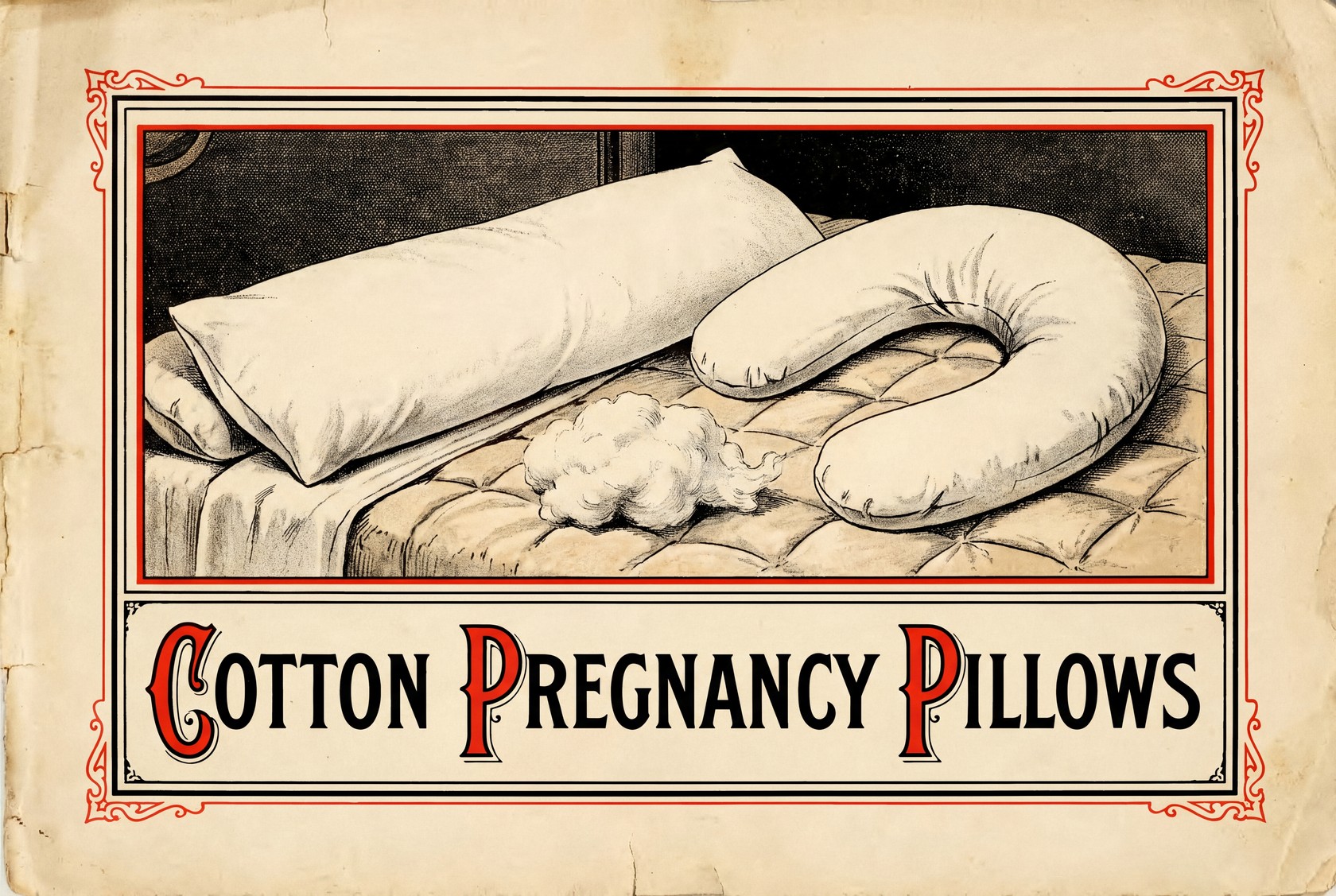
Most pillows sold as organic cotton pregnancy pillows put the cotton on the outside. In the seller pages we read, half used cotton as the fill, and none of those came in a curved U or C shape. The research also points in one direction: the pillow is there for comfort. In a randomized trial, a pregnancy pillow and ordinary pillows cut down back sleeping by the same amount.
Short answer: A cotton pregnancy pillow is worth buying if you want a firm, breathable body pillow and can live with its weight and limited washing. First check whether the cotton is the fill or only the cover. Of the 10 pages we read, 4 paired a cotton cover with latex, kapok or wool, and 1 used polyester. Buy it for comfort. After 28 weeks, going to sleep on your side matters more than which pillow helps you stay there.
This guide is for: people in the second or third trimester who want a pregnancy pillow without synthetic fill and need to know what the word cotton on a listing covers.
Key Takeaways
- Cotton is often only the cover. We read 10 seller pages. Five used cotton fill, 4 used latex, kapok or wool, and 1 used polyester (Boppy).
- Your sleeping side matters more than the pillow. Compared with the left side, going to sleep on your back late in pregnancy was linked to about 2.6 times the odds of stillbirth (CMAJ).
- Cotton fill is heavy and settles. One maker lists its standard-length cotton body pillow at 7.6 lbs (Rawganique), and another says natural fiber pillows "will compress over time" (Sachi Organics).
On This Page
What counts as a cotton pregnancy pillow?
It is a pillow shaped for pregnancy that uses cotton for its cover, its fill, or both. The label rarely says which, so check before buying.
Cotton pregnancy pillows come in 2 quite different builds. In the first, a cotton shell holds cotton batting, so every part that touches the skin is plant fiber. In the second, an organic cotton cover wraps a fill made of something else, and the cotton claim applies only to the outer layer. For example, Boppy's Total Body Pillow has an organic cotton slipcover and polyester filling (Boppy). Both descriptions are honest, but they answer different questions.
The fill decides most of what you feel at night: how firm the pillow is, how much it weighs, whether it springs back, and how it gets cleaned. The cover decides what sits against your skin and whether you can put it in the washer. If you want the basics on the fiber itself, our page on what cotton fill is explains how it behaves, and those same traits show up in a pregnancy pillow, only bigger.
Read the fill line before the headline. Suppose a listing says "organic cotton pregnancy pillow" and then lists polyester fiber in its specifications. That listing is selling you a cotton cover. A listing that names cotton batting or cotton fill is selling a cotton pillow. You will often have to scroll past the photos to find that line.
What fill do organic cotton pregnancy pillows use?
Half of the seller pages we read used cotton fill. The rest used latex, kapok, wool or polyester under an organic cotton cover.
We read 10 seller product pages on September 26, 2026. Each one sold a body or pregnancy pillow with a cotton or organic cotton cover and named its fill. We counted what the pages say, and we did not handle or test any pillow.
- Cotton fill (5 pages): Rawganique, The Futon Shop, Pure Living Space, Vincent Manufacturing and a Looms & Linens listing.
- Other natural fill (4 pages): shredded organic latex at Naturepedic, kapok on an Amazon kapok listing, organic shredded latex or kapok fiber in a wedge from The Organic Mattress, and wool at Frankenmuth Woolen Mill.
- Polyester fill (1 page): Boppy's Total Body Pillow, with polyester filling under an organic cotton slipcover.
What stood out was shape. None of the cotton-filled pillows came in a U or C shape. All 5 were sold as straight body pillows in rectangular sizes. We think the reason is that dense cotton batting is hard to pack evenly into a tight curve. That is our reading, and none of the pages says so. If you want cotton all the way through, expect a straight pillow that you bend into shape yourself.
Does a pregnancy pillow make side sleeping safer?
Going to sleep on the side late in pregnancy is the advice that matters, and research found ordinary pillows help people stay there equally well.
The case for side sleeping rests on the position a person falls asleep in late in pregnancy. A review in the Canadian Medical Association Journal reports that going to sleep on the back was associated with stillbirth, compared with going to sleep on the left side. The same review says that from 28 weeks you should avoid falling asleep on your back, and the right side appears to be as safe as the left (CMAJ). Earlier in pregnancy, position seems to matter less. A large NIH-funded analysis of first pregnancies found that sleeping on the back or side through the 30th week did not appear to raise the risk of stillbirth (NICHD).
Pillow listings tend to leave out the next part. The CMAJ review cites a randomized trial in which pregnancy pillows and regular pillows were equally effective at reducing back sleeping in late pregnancy (CMAJ). A separate trial of a pillow designed to stop back sleeping found no evidence that adopting it was effective (BJOG via PMC).
The comfort benefit does have support. In a randomized trial of first-time mothers, a pregnancy pillow used in the last trimester improved sleep quality (BMC Pregnancy and Childbirth). So a cotton pregnancy pillow earns its place if it helps you settle comfortably on your side. Ask your midwife or doctor about your own risk.
Which pregnancy pillow shape works with cotton fill?
A straight body pillow suits cotton fill best. The curved pillows we found on seller pages all used polyester or other fills.
| Shape | Example seller page | Fill on that page | Our judgement for cotton fill |
|---|---|---|---|
| Straight, standard length | Pure Living Space | Organic cotton | Good fit: the fill packs evenly and bends between the knees |
| Straight, full length | Rawganique | Organic cotton | Works for tall people, but heavy to lift and turn |
| Curved, C style | Boppy | Polyester | Not found in cotton in our reading; a tight curve is hard to pack evenly |
| U shape | None in our set | Not applicable | Not found in cotton in our reading; it would put heavy fill on both sides of the sleeper |
| Wedge | The Organic Mattress | Organic latex or kapok | Small enough that cotton could work, though we found none |
The shape decides where the support goes. You put a straight pillow between your knees and under your top arm, and you can curl its upper end toward your chest. A C shape joins a head section and a leg section in one piece. A U shape surrounds the sleeper front and back, which some people like as a backstop. The trial evidence above suggests any pillow placed behind you does a similar job.
For cotton fill, the straight shape is the practical choice. Cotton batting is dense, and it does not flow the way shredded latex or polyester clusters do, so a rectangle keeps the fill even. The last column of the table is our judgement, and no maker publishes it.
How heavy is a cotton-filled pregnancy pillow?
A cotton pillow is heavier than most people expect. One maker lists a standard-length body pillow at 7.6 lbs, and the batting settles.
Weight is what keeps a cotton pillow in place between your knees all night, and sellers leave it out of the headline. Rawganique lists its Junior Body Pillow, a standard-length model, at 7.6 lbs, and its longer Full Body Pillow weighs more still (Rawganique). For comparison, Frankenmuth Woolen Mill fills a body pillow of the same length with 4 pounds of wool, though its pillow is a little narrower (Frankenmuth Woolen Mill). The cotton version is the heavier one by a wide margin, so you get a pillow that will not slide off the bed when you shift in your sleep.
That matters late in pregnancy, when turning over already takes effort and you may move a pillow several times a night. A heavy pillow stays where it is put, and some people like that. It is also harder to lift, shake out and carry to the couch.
Cotton also settles over time. Sachi Organics, which makes cotton-filled bed pillows, says natural fiber pillows compress with use (Sachi Organics). A zipper makes that easier to manage, and Pure Living Space describes a zipper that lets the owner remove some of the cotton to reach a preferred level of support (Pure Living Space). Before you buy, check for a zipper and ask whether the maker sells extra batting. Our guide on whether a pure cotton pillow is worth buying covers the same settling in a standard bed pillow.
How does cotton fill compare with latex, kapok, wool and polyester?
Cotton is firm, breathable and heavy. Latex springs back, kapok is light, wool is springy, and polyester is the easiest fill to wash.
| Fill | What a seller page says | Our judgement for a pregnancy pillow |
|---|---|---|
| Organic cotton batting | Dense, between soft and firm; not machine washable (Pure Living Space) | Firm and steady; heavy; needs a washable case |
| Shredded organic latex | Organic latex fill, with GOLS named on the page; spot clean the inner pillow only (Naturepedic) | Springy and easy to shape; skip it for anyone with a latex allergy |
| Kapok | Firm support that stays soft; spot clean the inner pillow (Amazon kapok listing) | Light and easy to shift at night |
| Wool | Removable organic cotton cover; spot clean only (Frankenmuth Woolen Mill) | Lighter than cotton at a similar size |
| Polyester | Sold with an organic cotton slipcover (Boppy) | Easiest to wash; not a natural fill |
Any fill in this table can make a good pregnancy pillow. Cotton gives firm, even support that stays put at night, and the price is weight and harder cleaning. Shredded latex feels springier and shapes itself around a bump. It is a poor choice if anyone in your home has a latex allergy.
Kapok is the light option, and a lighter pillow is easier to rearrange at night. Wool falls between cotton and kapok. Polyester is the fill to pick if you most want to wash the whole pillow. Polyester does rule out an all-natural pillow, and that is often why people search for cotton in the first place.
What does an organic cotton label on a pregnancy pillow prove?
A GOTS "organic" label means the finished product is certified. It covers textile fibers, so check which parts of the pillow it names.
The Global Organic Textile Standard, or GOTS, uses 2 main label grades, and the certification belongs to the finished product. A product with the plain "organic" grade must contain at least 95% organic fibers, and the "made with organic" grade starts at 70%. A certifier adds that the entire supply chain must be certified before a finished product can carry the GOTS label (USB Certification). A certified label must show the label grade and the certifier's name (Oregon Tilth). In the US, textiles that meet GOTS may be sold as organic, but a product still cannot claim to be USDA organic unless the finished product is certified under USDA rules (USDA).
| Label wording | What it tells you | What it leaves open |
|---|---|---|
| GOTS "organic" | Nearly all the fiber is organic, and the finished item is certified | Whether the fill is part of the certified item |
| GOTS "made with organic materials" | At least 70% of the fiber is organic | What the rest of the fiber is |
| "Organic cotton cover" | The cover fabric | The fill material and whether the whole pillow is certified |
| "Pure cotton," no certifier | Fiber content | Whether the cotton is organic |
This leads to 2 checks. First, look for the certifier's name on the label before you pay, because a logo alone proves little, and ask the seller for the certificate if the name is missing. Second, read which part the organic claim covers, since many pregnancy pillow listings make it only for the cover. Latex products have their own standard, GOLS, and Naturepedic cites it on its body pillow page (Naturepedic).
Can you wash a cotton pregnancy pillow?
Usually only the cover can be washed. A cotton-filled pillow is hard to clean at home, so a removable, washable case is worth having.
Night sweats, leaks and snacks in bed make washing a real concern. Pure Living Space says its cotton body pillow can be spot cleaned or taken to a green dry cleaner, and that it is not machine washable (Pure Living Space). Naturepedic also limits its latex inner pillow to spot cleaning and sells a washable organic cotton case as an add-on (Naturepedic). At Vincent Manufacturing, the covers are organic cotton and machine washable (Vincent Manufacturing).
Here is our judgement. A soaked cotton core that weighs several pounds takes a long time to dry all the way through, and damp batting deep inside a pillow is where mildew starts. We would not buy a cotton pregnancy pillow without a zippered, washable case. We would also buy 2 cases, so one is always clean. A waterproof liner cancels out the breathability you chose cotton for, so a second cotton case makes the better backup.
Polyester pillows are the exception, since some can go through a large washer whole. For airing and spot cleaning a cotton bed pillow, see our page on what to check before buying an organic cotton pillow. The same routine works on a longer body pillow if it gets more drying time in the sun.
Common questions
Short answers to the questions people ask most about cotton and organic cotton pregnancy pillows, from safety to washing and settling.
Is an organic cotton pregnancy pillow safer than a regular one?
Research has not shown that it is safer for the baby. The advice that matters late in pregnancy is to go to sleep on your side (CMAJ). Organic cotton changes what touches the skin, but it does not change sleeping position.
When should you start using a pregnancy pillow?
Start whenever you get uncomfortable. The side-sleeping advice applies late in pregnancy, but many people reach for a pillow earlier because of hip or back ache. An NIH-funded analysis found that position did not affect stillbirth risk earlier in pregnancy (NICHD).
Can you use a regular body pillow instead?
Yes, a regular body pillow works. A straight cotton body pillow is the same object many sellers call a pregnancy pillow, and a trial cited in CMAJ found that regular pillows reduced back sleeping as well as pregnancy pillows did (CMAJ).
Does a cotton pregnancy pillow go flat?
It settles with use. One maker says natural fiber pillows compress over time, so a zippered pillow and a maker that sells extra fill are both worth looking for (Sachi Organics).
Is kapok or latex better than cotton for a pregnancy pillow?
No fill wins across the board. Kapok and shredded latex are lighter and easier to shape, while cotton is firmer and heavier. Latex is a poor pick for anyone in the home with a latex allergy.
Can you keep using it after the baby arrives?
Yes, a straight body pillow works as a side-sleeping pillow for anyone. Keep it out of the baby's sleep space, as one seller warns: "Do not leave a child sleeping on the pillow." (Amazon kapok listing).